

- Bees
- Chickens
- Cows
- Deer
- Donkeys
- Elephants
- Frogs
- Geese
- Horses
- Lobsters
- Pigs
- Rabbits
- Rats
- Seals
- Sheep
- Turkeys
Sheep
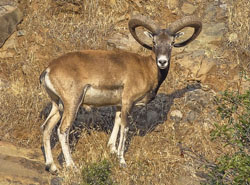
Sheep originated from wild sheep which include the Mouflon (Europe and Western Asia), the Urial (Asia), the Argali (Asia) and the Bighorn (Asia and North America). Domestic sheep originated from the Mouflon, Urial and Argali. Two wild mouflon populations still exist: the Asiatic mouflon ( living in the mountains of Asia Minor and southern Iran) and the European mouflon (living on the islands of Sardinia and Corsica).
Sheep were domesticated by humans around 10,000 BC. They were among the first animals domesticated. As sheep were raised under tamed conditions, they went through several changes. They began to develop more wool and less hair. The color of the wool and hair changed from brown and shades to whites and black. Their ears became more of a lop ear than an erect ear. The horns that the wild sheep possessed were weakened and disappeared from many breeds. The tails of wild sheep had less vertebrates or bones than the sheep do now. And today's sheep has a smaller brain.
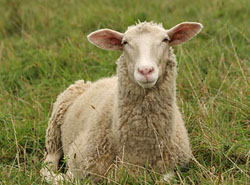
Selection for economically important traits like wool type, has resulted in more than 200 distinct breeds of sheep. Some breeds only have hair, some wool and some both.
Female sheep are called ewes, baby sheep are called lambs, and male sheep are called rams. A group of sheep is called a flock.
Sheep are precocial, gregarious animals. Precocial means that they have a high degree of independence at birth. Gregarious means that they flock together or like to be with a group. Sheep are social animals, but the most important reason they like to flock together is for protection. Some breeds of sheep are more gregarious than others and there are also some solitary breeds.
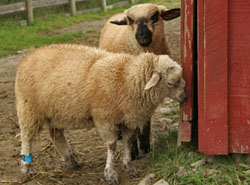
Sheep are timid, nervous and easily frightened animals and for the most part defenseless against predators like coyotes and wild dogs. Their only means of survival is to flock together in large numbers and to run away from predators. For this reason, shepherds are able to use dogs to move sheep around. Sheep will consider the dog as a predator, flock together for protection and move away from the danger.
Sheep have a flight zone, which is the space they like to keep between themselves and others. The flight distance depends on the situation and on the tameness or wildness of the sheep.
Sheep don't like to walk in water or move through narrow openings. They prefer to move into the wind and uphill than down wind and downhill.
Sheep usually give birth once a year and have 1-3 lambs. They normally live to be about 8 years old, but can sometimes live to be as old as 20. Pregnancy lasts for 147 days.
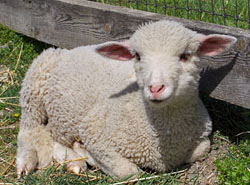
Lambs form strong bonds with their mothers. They can identify their mother by her bleat.
Lambs have 8 temporary incisors that erupt at approximately 2 months of age. They will be replaced by larger and wider permanent incisors between 12 months and 4 years of age. At this point they will have all their teeth. Sheep don't have top front teeth.
Sheep are ruminants. They have a four-chambered stomach, using the first chamber to store quickly ingested food (cud) which they then bring back into their mouths to chew again before fully digesting it. Sheep spend about a third of their life ruminating and need peace and quiet.
Sheep are very selective in their grazing habits. Sheep have a split in their upper lip, with this they are able to pick the preferred leaves off the plant.
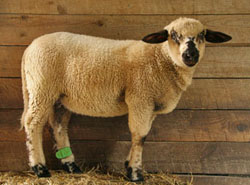
Sheep rank in intelligence just below the pig and even with cattle. They react to situations they encounter using instincts that have developed over centuries.
Sheep see in color. The average sheep has a field of vision of 270 degrees. The visual field can be affected by the amount of wool on the face. They have a poor depth perception. For this reason, sheep will avoid shadows or harsh contrasts between light and dark. They will move towards the light.
Sheep have an excellent sense of hearing. They are more sensitive to high frequency noise than people and get scared by loud noises.
When sheep are on their back they will need to be helped, because they can't get up from that position.